






Most projects get this wrong from day one. They burn through their entire marketing budget on paid ads, listings, and "growth hacks" that generate noise but no real demand. Then the runway runs out, and they wonder why nobody cares.
Here's the truth: in the crypto world, you don't need a massive budget to win. You need a clear story, a small group of people who actually care, and the discipline to spend where trust compounds — not where attention disappears.
This guide walks through exactly how to market a crypto project with a small budget, based on what actually works for early stage projects.
Start With a Clear Story, Not a Crypto Marketing Plan

Before you spend a single dollar on marketing campaigns, paid ads, or influencer marketing, get one thing right: your narrative.
A clear narrative is the single highest-leverage way to promote a crypto business — every other tactic depends on it. The most profitable crypto projects don't fight for attention inside crowded categories. They create entirely new ones, positioning themselves as the reference point.
Ask yourself: if a stranger spent 30 seconds on your site, could they explain what you do, who it's for, and why it matters? If not, no amount of money fixes that. Clear positioning is the game changer that separates projects people remember from ones that drown in noise.
Communicate the specific, practical value of your project — not just its investment potential. The crypto space is full of "revolutionary" projects with no clear story. A simple, honest narrative beats a buzzword-stuffed one every time.
Build Community Before You Build Anything Else
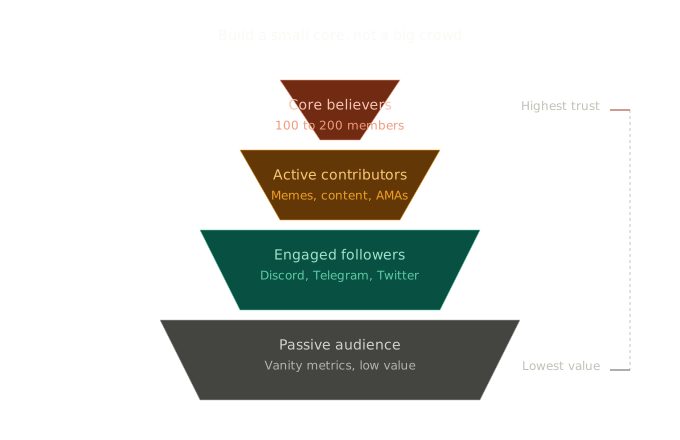
For early stage projects, 50 to 60 percent of your marketing budget should go to community building and content marketing. Growth stage projects shift that balance, allocating more to amplification — but at the start, trust comes first.
Here's the rule most projects miss: nurture 100 to 200 highly invested community members rather than chasing 10,000 passive followers. A small core of believers will out-perform a massive audience of tourists every time. They create user-generated content, refer new users, defend the project, and stick around through volatility. Vanity metrics like follower counts mean nothing if nobody shows up when it matters.
Create official, active profiles on the core platforms — Twitter, Telegram, and Discord — and actually use them. Don't just moderate. Have real, high-context discussions. Founders who personally answer questions in Discord or Telegram build trust significantly faster than projects hiding behind community managers.
A few practical moves that cost almost nothing:
- Run AMAs (Ask Me Anything sessions) regularly. They convert lurkers into active members.
- Encourage user-generated content — memes, tutorials, reviews. Reward it.
- Set up referral programs that give bonus tokens or exclusive access to people who bring in new users.
- Add governance voting and exclusive perks for committed community members. This mixes financial incentives with real relationships.
- Participate genuinely on Reddit and Bitcointalk. Provide value, host AMAs, answer questions. Never shill.
The community oriented approach isn't just nice to have. It's the foundation everything else stands on.
Treat Content Marketing and SEO as Compounding Assets

Content marketing and SEO are the only truly compounding channels in crypto marketing. Paid ads stop the moment you stop paying. A well-ranked article keeps bringing in new users for years.
That's why successful crypto marketing strategies prioritize content creation early. It reduces acquisition costs over time and builds real authority — the kind of trust that converts attention into action.
What to publish:
- In-depth guides that answer specific questions your target audience is searching for
- "How-to" tutorials that solve real problems for early users of your product
- Comparative analyses that rank for high-intent queries (think "X vs Y" type searches)
- Educational content explaining the practical use of your blockchain technology
The goal isn't to write about everything. It's to own a narrow set of search terms your ideal users are typing into Google. Publish less, but make each piece genuinely useful.
A practical tip: find topics where existing content is thin or outdated, then write the definitive piece. Most projects skip SEO because the payoff isn't immediate. That's exactly why it works — most projects won't put in the effort.
Use Influencer Marketing as a Performance Channel
Influencer marketing in crypto gets a bad reputation because most projects do it wrong. They pay big-name accounts for one shoutout, see a brief spike in traffic, and call it a campaign.
The shift you need to make: treat influencer marketing as a performance channel, not a brand awareness one. Focus on conversions, wallet connections, and real engagement — not impressions or follower counts.
Micro-influencers usually outperform macro-influencers for early stage projects. They have highly engaged, niche audiences and verifiable on-chain reputations. Peer-to-peer recommendations from someone trusted in a small community convert better than a celebrity tweet seen by millions.
When you do run influencer campaigns, structure them. The "Whisper, Tease, Shout" sequence works well — start with quiet seeding to a few trusted voices, build anticipation with hints, then go loud at launch. This builds momentum rather than blowing your budget on a single moment.
The best influencer partners can clearly explain your product's value. If they can't articulate why your project matters, they'll generate visibility without demand. That's wasted spend.
Get Listed Where It Costs Nothing
Some of the most valuable crypto marketing moves are free. List your project on:
- CoinMarketCap
- CoinGecko
- CoinMarketCal
- Other relevant aggregator and tracker sites
These platforms are where serious investors look for new projects. Getting listed costs nothing but research time and submission effort, and the credibility boost is real. Most projects skip this because it's not glamorous. Don't.
Spend Paid Ads and PR Carefully
Paid ads and crypto PR have their place — but only after the foundation is set. If you don't have a clear story, an engaged community, and content that backs up your claims, paid channels will just amplify confusion.
For most projects with small budgets, a smart split looks something like this:
- 50 to 60 percent on community building and content marketing
- 20 to 30 percent on influencer marketing (mostly micro-influencers)
- 10 to 20 percent on paid ads, press releases, and amplification
The exact ranges depend on your project's stage. Pre launch, lean heavier on community and narrative. Post launch, shift more toward amplification once you have proof points.
When you do invest in PR, focus on media coverage that targets warm audiences — publications and newsletters your potential users actually read. A feature in a major outlet feels exciting, but if their readers aren't your target audience, you've paid for vanity coverage.
Build Feedback Loops With Analytics Tools
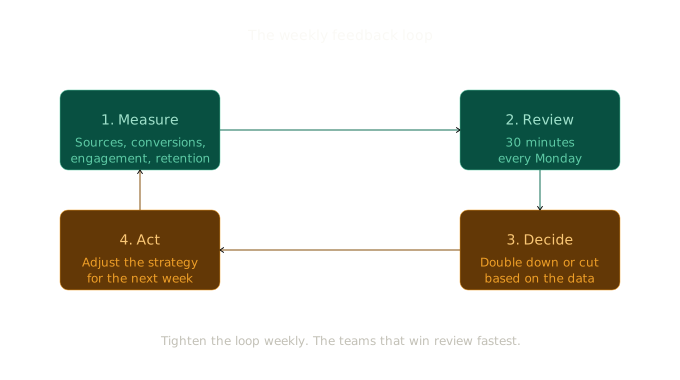
Without measurement, you're guessing. Set up basic analytics tools from day one — Google Analytics, on-chain dashboards, social metrics tracking — and review them weekly.
What to actually measure:
- Where new users are coming from
- Which content drives wallet connections
- Which community channels produce the most engaged members
- Which campaigns drive sustained activity, not just short term hype
The point isn't to drown in dashboards. It's to create feedback loops that tell you what's working so you can double down, and what isn't so you can cut it. Most projects skip this and end up running the same ineffective strategy for months.
What to Build In House vs. Outsource to a Crypto Marketing Agency

For most crypto startups, the answer is: build community in house, outsource specialized work.
Community is the heart of your project. It needs to be run by people who genuinely believe in what you're building — usually founders, early team members, and dedicated community managers. You can't fake authenticity here.
But areas like SEO, content production, paid campaigns, and PR often benefit from a crypto marketing agency with existing relationships, processes, and team's expertise in the crypto space. The right agency saves you months of trial and error.
A simple test: if it requires deep specialized knowledge or established media relationships, outsource it. If it requires authentic relationships with your community, keep it in house.
The Core Principle: Spend Where Trust Compounds
The single most important principle behind successful crypto marketing on a small budget is this — spend where trust compounds, not where attention disappears.
Paid ads disappear the moment you stop paying. Hype campaigns fade in days. Vanity metrics impress nobody who matters.
But a clear story, a tight community, well-ranked content, and trusted partnerships keep working long after the initial spend. They compound. They turn small budgets into long-term success.
Most crypto projects fail not because they couldn't afford marketing, but because they spent on the wrong things. Build the foundation first. Add amplification only when the foundation can support it. That's how you market a crypto project with a small budget — and actually win.
FAQs
How much does it cost to market a crypto project on a small budget?
Most early stage projects can run an effective strategy on $2,000 to $10,000 a month. The split matters more than the amount — keep most of it in community building and content marketing, not paid ads.
What's the most effective strategy with limited money?
Community, content, and SEO. These compound. Paid channels stop the moment you stop paying.
Should I hire influencers on a small budget?
Yes, but only micro-influencers with engaged niche audiences. They convert better than macro-influencers and cost a fraction of the price. Skip vanity metrics like follower counts.
Is crypto PR worth it with a small budget?
Only after the foundation is set. PR amplifies what already exists. If your narrative isn't clear, it amplifies confusion.
How long before crypto marketing starts working?
Community shows results in weeks. Content and SEO take 3 to 6 months but compound for years. Paid ads work fast but stop the moment you stop spending.
Build in house or hire a crypto marketing agency?
Build community in house — it needs authentic voices. Outsource SEO, content, paid campaigns, and PR to an agency with the team's expertise and existing relationships.
Biggest mistake crypto projects make?
Spending on short term hype instead of long-term trust. Build trust first, amplify second.

From The Blog
You may also like


Stop Guessing. Start Scaling.
Data-driven crypto marketing that actually delivers users, not vanity metrics.

GrowthChain is a disruptive web3 marketing agency looking to propel your customer base. We focus on DAOs, DeFi, NFT and Crypto projects.

GrowthChain Designed, 2025
.svg)