






Growth in crypto often looks explosive from the outside. Token launches attract headlines, digital assets surge in popularity, and new blockchain projects emerge across multiple chains. But behind every successful protocol or exchange is a less glamorous question:
How much did it cost to acquire those users?
Understanding crypto customer acquisition cost is no longer optional. As valuation frameworks mature, investors and operators increasingly focus on unit economics rather than hype. Projects that ignore customer acquisition often discover too late that high spend does not always translate into long-term corporate value.
This article explains what drives acquisition cost in crypto, why it is typically higher than in traditional industries, and how crypto companies can optimize marketing spend without sacrificing genuine engagement.
What Is Customer Acquisition Cost in Crypto?
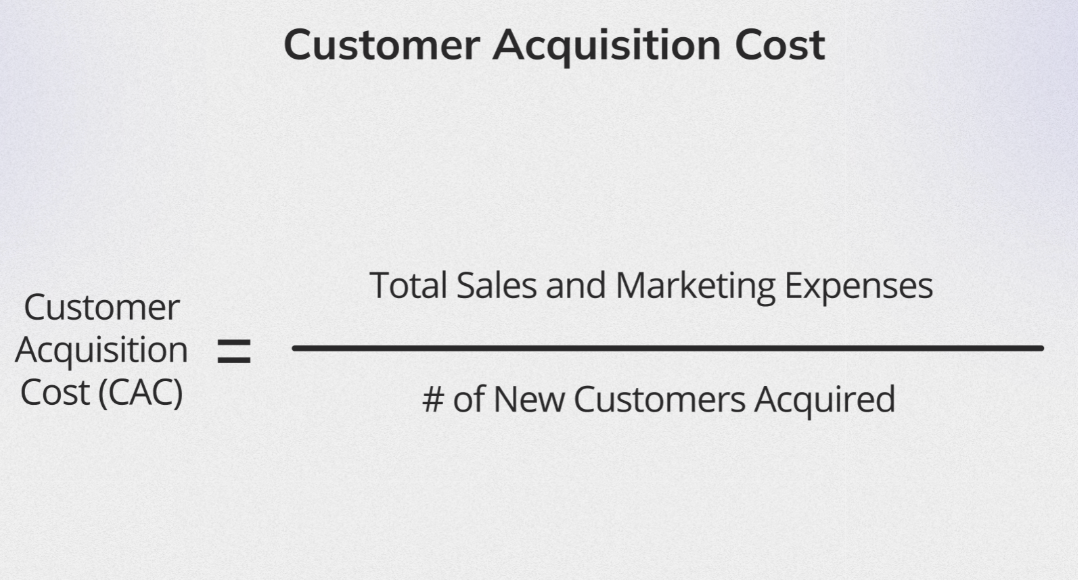
At its core, customer acquisition cost (CAC) measures how much a business spends to acquire new customers. The formula is straightforward:
CAC = total sales and marketing spend ÷ customers acquired
However, crypto companies operate differently from typical enterprise software companies. Their acquisition cost often includes elements that do not exist in traditional tech, such as token incentives, bounty programs, ecosystem funds, and community building initiatives.
Many teams calculate CAC incorrectly because their marketing budget excludes token emissions or rewards. A better estimate counts every resource used to attract potential users — even if that value is distributed through tokens rather than cash.
When measured accurately, Web3 customer acquisition is significantly more expensive than Web2. DeFi protocols average around $85 per user, while user crypto gaming projects sit closer to $42 per player. Exchanges can reach roughly $150 per customer, and poorly structured airdrops have pushed CAC above $500–$1,000 per retained user. For projects looking to optimize retention and long-term success, strong community management can be a crucial strategy.
This is one of the few reasons crypto startups struggle despite raising large ecosystem funds. Every dollar spent acquiring the wrong users reduces enterprise value and weakens future token cap tables.
Why Crypto Companies Face Higher Acquisition Costs
Most businesses rely on proven marketing channels refined over two decades. Crypto marketing, by contrast, is still evolving.
One major driver of high CAC is onboarding friction. New users must create wallets, store seed phrases securely, and understand gas fees before they even interact with a product. When users fail to understand gas fees or encounter complex interfaces, drop-off rates can reach 60–80%.
Projects introducing social logins or gasless transactions often see immediate improvements because they remove barriers that prevent activation events.
Another challenge is over incentivizing behavior. Token emissions, testnet incentives, and player airdrop campaigns can attract massive attention — but not always the right audience.
Unsustainable rewards tend to attract mercenaries rather than community-focused participants. These users arrive for incentives and disappear shortly after, inflating metrics without contributing to long-term community growth.
High CAC is frequently the result of flashy campaigns that generate traffic but fail to produce retained users.
Competition adds another layer of pressure. Advertising restrictions push marketers toward fewer channels, triggering bidding wars that drive up acquisition cost. Influencer marketing remains popular, yet diminishing returns suggest that many campaigns are no longer delivering strong ROI.
Market cycles also play a role. CAC often rises in bear markets due to weaker demand, but it can also spike during bull runs when every blockchain project is competing for attention.
Smart marketers focus spend on high-intent segments instead of chasing vanity growth.
Crypto vs Traditional Enterprise Companies
Typical enterprise software companies spend roughly 7–15% of enterprise value on customer acquisition. Some crypto companies spend between 29–95%, a gap that significantly impacts corporate value.
This difference explains why investors increasingly analyze metrics like LTV-to-CAC ratios when evaluating crypto startups.
The conversation has shifted from “How many new users did you acquire?” to “Did those users create sustainable value?”
Projects that rely heavily on incentives without lifecycle marketing often face high churn, forcing them to continuously acquire replacements — an expensive cycle that damages long-term business health.
How to Calculate CAC Correctly

Many teams think they understand their cost but are actually flying blind.
To calculate CAC properly, include everything tied to acquisition:
- Marketing spend
- Influencer campaigns
- Strategic partnerships
- Educational content
- Community building
- Token incentives
- Bounty programs
Some founders mistakenly exclude ecosystem funds raised because they do not view them as marketing. In reality, if those funds help acquire users, they belong in the equation.
Without proper attribution, wasted spend hides inside broad marketing categories, making optimization nearly impossible.
Customer Acquisition Funnel Optimization Matters More Than Spend
Reducing CAC is rarely about cutting budgets. It is about becoming highly optimized.
Customer acquisition funnel optimization focuses on improving conversion from awareness to activation and ultimately retention. When onboarding improves, more potential users become active participants, lowering the effective cost per user.
Even small improvements in UI/UX can dramatically change unit economics.
Behavior-triggered lifecycle marketing also helps by guiding users toward meaningful activation events rather than letting them disappear after signup.
The goal is not just to acquire — it is to acquire intelligently.
The Hidden Danger of Over Incentivizing
Token incentives are powerful but risky.
When rewards are misaligned with real usage, projects attract participants who never intended to stay. This creates the illusion of growth while quietly increasing acquisition cost.
Airdrop-heavy strategies often result in high CAC because they reward short-term behavior instead of long-term engagement.
The strongest projects focus on community building rather than transactional relationships. Genuine engagement creates power users who advocate for the product and bring in new customers organically.
Community-led growth is one of the most effective ways to reduce acquisition cost.
Why Many Crypto Startups Get CAC Wrong
Crypto startups often prioritize speed over efficiency and may overlook the importance of a comprehensive crypto roadmap. Growth feels urgent, especially when competitors are launching across multiple chains.
But not today’s growth strategies will age well.
Teams frequently overspend on marketing before identifying their ideal segment users. Others launch broad campaigns without understanding project type differences between DeFi protocols, gaming ecosystems, or infrastructure platforms.
When targeting is weak, CAC rises quickly.
Some founders assume more spend equals more users. In reality, focus spend beats scattered budgets every time.
How Successful Projects Reduce CAC
The most resilient businesses treat acquisition as a long-term system rather than a series of campaigns.
Successful teams typically:
- Target high-intent communities instead of broad audiences
- Invest in educational content that builds trust
- Form strategic partnerships to share acquisition cost
- Optimize onboarding to convert traffic efficiently
Referral programs are especially powerful because they turn existing users into advocates. When a retained user brings in another participant, CAC drops naturally.
AI-driven personalization is also becoming a major advantage. Automated messaging based on behavior helps guide users through the funnel while improving activation rates.
The future belongs to teams that optimize continuously rather than chase hype.
Understanding Cost Per Wallet
Traditional SaaS companies focus on signups. Crypto businesses should think differently.
Cost per wallet is emerging as a more meaningful metric because it reflects real participation rather than superficial interest.
Top-performing campaigns have achieved CAC as low as $6–$8 per wallet, while poorly managed efforts fluctuate dramatically.
This gap highlights a critical lesson: acquisition success depends more on strategy than budget size.
Regulatory Clarity Can Lower CAC
Compliance is often viewed as a burden, yet it can reduce acquisition cost.
Brands that emphasize transparency tend to build trust faster, improving conversion rates. Although regulatory processes increase short-term cost, they often lead to stronger long-term metrics.
Simpler products also tend to acquire users more efficiently than complex platforms.
In crypto, clarity is a competitive advantage.
The Future of Customer Acquisition in Crypto

The industry is moving toward more disciplined growth models. Investors now expect projects to demonstrate sustainable unit economics rather than rely solely on token appreciation.
Teams that balance acquisition with retention will define the next generation of successful blockchain businesses.
Those who ignore CAC risk burn capital without building a lasting community.
Acquisition is no longer just a marketing problem — it is a strategic one.
FAQs
What is a good crypto customer acquisition cost?
There is no universal number, but many DeFi projects average around $85 per user, while exchanges may reach $150. Gaming projects are often lower. The key is ensuring CAC aligns with long-term ROI.
Why is customer acquisition cost higher in crypto?
Complex onboarding, gas fees, smaller crypto-native audiences, and reliance on token incentives all contribute to higher costs compared to traditional businesses.
How do crypto companies calculate CAC?
Divide total marketing and sales expenses — including token rewards and community costs — by the number of new users acquired during a specific timeframe.
Can high CAC cause project failure?
Yes. High acquisition cost drains resources that could otherwise improve product development or community growth.
How can blockchain projects lower CAC?
Improving onboarding, forming strategic partnerships, focusing on retained users, and avoiding over incentivizing are among the most effective strategies.
Are airdrops still effective?
Airdrops can work, but poorly designed programs often attract short-term participants rather than loyal community members.
What metric should teams watch besides CAC?
LTV-to-CAC ratio is critical. It measures whether customers generate enough value to justify the cost of acquiring them.

From The Blog
You may also like


Stop Guessing. Start Scaling.
Data-driven crypto marketing that actually delivers users, not vanity metrics.

GrowthChain is a disruptive web3 marketing agency looking to propel your customer base. We focus on DAOs, DeFi, NFT and Crypto projects.

GrowthChain Designed, 2025
.svg)